
 Adult
Adult



Emergency Dental Care
Same-Day Care for Dental Emergencies
 Accepting New Patients & Most Insurances
- Flexible Financing Options
- In-House Insurance Plans Available
- Open After 5:00PM & Saturdays
- Se Habla Español
 Accepting New Patients & Most Insurances
 Urgent Dental Care for Severe Pain, Swelling & Bleeding
Urgent dental care is required for urgent issues like intense tooth pain, broken or knocked out teeth, infections, or uncontrolled bleeding. Tooth infections can quickly escalate and become a big (and expensive) problem, even if the pain doesn’t feel severe.
Same-day treatment with an emergency dentist is necessary to prevent further complications, relieve your pain, and make sure there are no underlying problems that need to be addressed. If you’ve experienced a mouth injury, painful decay, or sudden facial swelling, call our Davie, Plantation, or Tamarac office for emergency treatment.
What Qualifies As a Dental Emergency?
A dental emergency includes any situation requiring immediate treatment to stop pain, control bleeding, or prevent long-term complications. Common emergencies include knocked-out teeth, cracked or fractured teeth, severe toothaches, infections or abscesses, swollen gums, lost fillings or crowns, and injuries to the soft tissue.
What Should I Do if My Tooth Gets Knocked Out?
A knocked-out tooth needs immediate attention—ideally within 30 minutes—to increase the chance of saving it. Handle the tooth by the crown only, gently rinse it if dirty, and try to place it back in the socket. If that’s not possible, store it in milk or an emergency tooth-preservation solution. Quick action preserves nerve viability, improves reimplantation success, and reduces the risk of long-term damage or the need for tooth replacement.
When Does a Toothache Become an Emergency?
A toothache becomes a dental emergency when the pain is severe, persistent, or accompanied by swelling, fever, or sensitivity to pressure. These symptoms often signal an infection or abscess, which can spread quickly if not treated. Emergency evaluation helps identify the cause, relieve discomfort, and prevent serious complications like bone infections. If pain interferes with daily activities or worsens over time, it needs urgent professional care.
Can I Wait to Treat a Cracked or Broken Tooth?
No; a cracked or fractured tooth should be evaluated as soon as possible, especially if it’s causing pain, exposing the tooth’s inner layers, or is a result of direct trauma. Delaying going to a dentist can lead to more damage, infection, and even tooth loss. Same-day dental care will stabilize the tooth, protect the pulp, and determine the best treatment options for your condition.
What Are the Signs of a Dental Infection or Abscess?
An abscess usually causes intense pain, swelling, throbbing, or sensitivity to hot and cold temperatures. You might also notice a bad taste, fever, gum tenderness, or a pimple-like bump near the infected tooth. Since infections can spread rapidly to the jawbone or bloodstream, they need urgent treatment from a professional. The emergency dentists at our Davie, Plantation, and Tamarac offices can drain the infection, relieve pressure, and determine if antibiotics, root canal therapy, or extraction is necessary.
What Should I Do if a Filling or Crown Falls Out?
A lost filling or crown will expose a vulnerable tooth and might lead to severe sensitivity, pain, or further damage. While pain level may not always feel like an emergency, same-day evaluation is highly recommended to protect the tooth. If possible, you should avoid chewing on the affected side and bring the crown with you to the dentist. Getting same-day dental care will help prevent infection and determine the best treatment options for your situation.
Can I Go to the ER for a Dental Emergency?
While hospital emergency rooms can provide pain relief, prescribe antibiotics, and address severe bleeding, they usually can’t perform dental procedures. For issues like infections, fractured teeth, or lost restorations, an emergency dentist will be able to provide the appropriate treatments. We recommend always trying to visit a dental clinic to make sure you receive the right care.
Temporary Lose Appliance Solutions
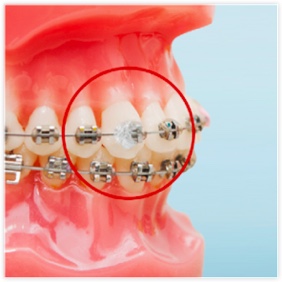
Loose Bracket
If your bracket or band is still attached to the wire, you should leave it in place and put wax or Gishy Goo on it if needed for comfort. The bracket or band can be removed easily by removing the colored tier and sliding the bracket off.
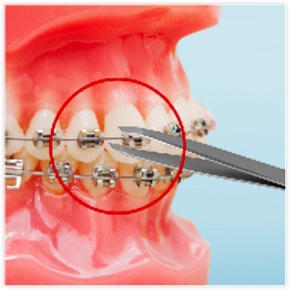
Loose Wire
Using a pair of tweezers, try to put your wire back into place. It is okay to use a piece of floss to tie the wire into place; tie the floss around the bracket in place if the missing colored o-ring. If it is still sharp, place wax or Gishy Goo on it.
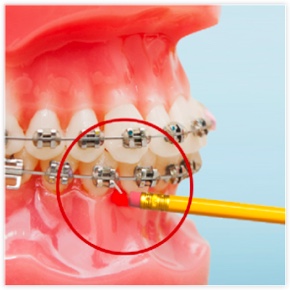
Poking Wire
Using a pencil eraser – push the poking wire down or place wax or Gishy Goo on it so that it is no longer poking.
In Case of Discomfort
When braces are applied, you may feel general soreness in your mouth and teeth may be tender to biting pressure for 3-5 days. It is important to maintain a soft diet until your teeth are able to chew again without pain. Irritated gums and soreness can often be relieved by rinsing your mouth with a warm salt-water or mouthwash. Simply dissolve one teaspoonful of salt in eight ounces of warm water, and rinse your mouth vigorously.
Orabase on the affected area can also help relieve discomfort and can be found in most pharmacies. If the tenderness is severe, take Acetaminophen (Tylenol) or whatever you normally take for headaches or pain. Aspirin, Ibuprofen (Motrin, Advil) and Naproxen Sodium actually slow tooth movement, so it is not advisable to use them frequently while wearing braces. The lips, cheeks, and tongue may become irritated for 1-2 weeks as they become accustomed to the surface of the braces. You can put wax or Gishy Goo (sold in the office) on the braces to lessen inflammation.
After alleviating your discomfort, it is very important that you call our office as soon as possible to schedule a time to repair the problem. Allowing your appliance to remain damaged for an extended period if time may result in disruptions to your treatment plan.
Get Emergency Dental Care
Contact us to schedule an appointment at our Davie, Tamarac, or Plantation office.