
 Adult
Adult




Dental crowns are a versatile solution for a variety of dental issues and are a cornerstone of restorative dentistry. Whether it’s restoring a broken tooth, anchoring a dental bridge, or covering a dental implant, crowns are designed to improve both the functionality and aesthetics of your smile. They can be made from various materials such as porcelain, ceramic, metal, or a combination and are custom-fitted to cap or completely cover a tooth.
 Temporary vs. Permanent Dental Crowns
 Temporary vs. Permanent Dental Crowns
Temporary and permanent dental crowns serve distinct purposes in dental care. Temporary crowns are placed as a provisional solution, usually made in the dental office and used to protect a tooth while waiting for the permanent crown to be created in a dental lab. These are typically made from less durable materials and are not meant for long-term use.
Permanent tooth crowns are custom-made to fit your tooth precisely and are constructed from high-quality materials like porcelain, ceramic, or metal. Designed to last many years, permanent crowns restore the tooth’s function and appearance, providing a long-term solution to dental issues.
What Are Dental Crowns Used For?
A dental crown becomes necessary when a tooth is significantly damaged or decayed and cannot be repaired with a simple filling. It’s also used to restore a tooth after a root canal, cover a dental implant, or anchor a dental bridge. Crowns are recommended for teeth that are cracked, worn down, or otherwise weakened to protect them from further damage and restore their strength, functionality, and appearance.
Restoring Decayed Teeth
Using a dental crown to restore decayed teeth is an effective treatment option. When decay causes substantial damage to a tooth’s structure, a crown can cover and protect the tooth from further deterioration. It restores the tooth’s shape, size, strength, and appearance, allowing for normal function and a healthy smile.
Protecting Weakened Teeth
Dental crowns also play a crucial role in protecting weakened teeth. Whether due to decay, injury, or wear, a crown reinforces a tooth’s structure, preventing breakage or further damage. By encasing the entire tooth, crowns distribute biting forces evenly, safeguarding against cracks or fractures and protecting the tooth.
Covering & Supporting Dental Fillings
When a tooth has a large filling, and there isn’t enough natural tooth structure remaining to support it, a dental crown can be used for additional support and coverage. The crown encases the tooth, providing structural integrity and protecting the filling and tooth from further damage.
Covering Dental Implants
When a tooth is missing or needs extraction due to severe damage or decay, dental implants become necessary. They serve as a sturdy foundation for artificial teeth, such as crowns, ensuring a permanent solution that closely mimics natural teeth in appearance and function. Implants provide stability, prevent bone loss, and maintain the integrity of facial structures, offering a long-term remedy for tooth loss.
Anchoring Dental Bridges
Dental crowns are integral in anchoring dental bridges, which replace missing teeth. The crowns are placed on the natural teeth or implants adjacent to the gap, serving as stable supports for the bridge. This setup allows the replacement teeth to securely fill the space to fully restore dental function and appearance.
Fixing Discolored or Deformed Teeth
Dental crowns offer a cosmetic solution for fixing discolored or deformed teeth to enhance the smile’s appearance. By covering the entire visible portion of the affected tooth, a crown can correct its color, shape, and overall look, resulting in a more aesthetically pleasing and uniform smile while boosting your confidence and oral health.
Covering a Root Canal
After a root canal, covering the treated tooth with a dental crown is essential for its protection and reinforcement. Since the tooth is often weakened from the procedure, a crown helps restore its natural strength, function, and appearance. This safeguarding measure ensures the tooth’s durability and guards against potential fractures or further damage.
What Are the Different Types of Dental Crowns?
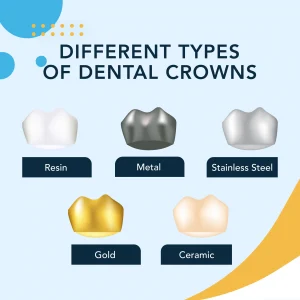
There are several materials available for dental crowns that cater to different needs and preferences. Porcelain, ceramic, or zirconia crowns are popular for their natural color match, making them perfect for front teeth restoration.
Metal crowns, including gold, palladium, nickel, and chromium, are prized for their exceptional durability and strength and are ideal for molars subjected to heavy chewing forces. Lastly, resin crowns provide an economical alternative, though they may wear down faster and are less durable than their counterparts, making them suitable for temporary or less visible applications.
Porcelain Crowns
Porcelain crowns are known for their excellent natural color match, making them particularly suitable for front teeth. They are highly aesthetic, resistant to staining, and can be a good choice for people with metal allergies. However, they can be more brittle than other types of dental crowns.
Ceramic Crowns
Ceramic crowns offer a metal-free option that provides superior aesthetics with color and translucency that closely mimics natural teeth. They are strong, durable, and ideal for individuals looking for a natural appearance without compromising the crown’s longevity.
Resin Crowns
Resin crowns are an affordable option compared to other types of crowns. They are made from a composite resin material that can be color-matched to the surrounding teeth, though they are less durable and more prone to wear and fractures over time.
Stainless Steel Crowns
Stainless steel crowns are predominantly used in pediatric dentistry to protect primary teeth until they are naturally lost. They are cost-effective, durable, and require fewer dental visits to place, making them a practical choice for children’s temporary teeth.
Composite Resin Crowns
Composite resin crowns offer a balance between aesthetics and affordability. They can be color-matched to adjacent teeth and are easier to repair than porcelain or ceramic. However, they may wear down more quickly and are not as strong as other materials.
Temporary Crowns
Temporary crowns are made in the dental office and used while waiting for a permanent crown to be fabricated by a dental lab. They are usually made from acrylic or stainless steel and serve as a protective measure for the tooth during the interim period.
Base Metal Allot Crowns
Base metal alloy crowns consist of non-noble metals that provide excellent strength and resistance to corrosion. They are highly durable, making them suitable for back teeth where the forces from chewing are greatest. Their metallic color is the main drawback of this type of dental crown in terms of appearance.
What Happens During the Dental Crown Process?
The process of getting a dental crown involves several key steps to restore and protect a damaged tooth. Your Plantation dentist will evaluate the tooth, often using x-rays, to determine the extent of damage and the suitability for a crown. The tooth is then prepared by reshaping its surface to fit the crown, followed by taking impressions to create a custom crown.
A temporary crown may be placed while the permanent crown is being fabricated. Once ready, the permanent crown is adjusted for fit and color, then cemented into place, fully encasing the tooth to restore its function and appearance. This multi-step process ensures the crown not only fits perfectly but also blends seamlessly with your natural teeth.
Exam & X-Rays
The first step of getting a dental crown involves a thorough exam of the affected tooth, accompanied by X-rays to assess the extent of damage and underlying bone structure. This helps the dentist determine the best course of action and whether a crown is the appropriate solution.
Numbing the Tooth
Before proceeding with the crown preparation, the dentist numbs the tooth and surrounding gum tissue using a local anesthetic. This ensures the patient’s comfort throughout the procedure, making the process pain-free.
Reshaping the Tooth
After the tooth is numbed, the dentist then reshapes the tooth’s surface to prepare it for the crown. This involves removing a portion of the enamel to allow the crown to fit snugly over the tooth, maintaining a natural tooth shape and size.
Making an Impression of the Tooth
After reshaping, an impression of the tooth is taken either digitally or with a physical mold. This impression is crucial for creating a crown that precisely matches the tooth’s dimensions and the bite’s alignment.
Creating the Crown
The impression serves as a guide for crafting the crown, which can be made from various materials based on the patient’s needs and aesthetic preferences. The crown is custom-made in a dental lab to ensure a perfect fit and natural appearance.
Checking the Fit & Color
After the crown is manufactured, the dentist examines it to ensure that it matches the color and size of the tooth and surrounding teeth. If necessary, the dentist may make adjustments to ensure that the crown fits and looks natural. This ensures that the crown functions properly and looks aesthetically pleasing.
Cementing the Crown Into Place
The final step of the dental crown process is permanently cementing the crown onto the prepared tooth. The dentist carefully applies dental cement, places the crown, and then makes any necessary adjustments to complete the restoration process and ensure a perfect fit and bite.
How to Protect & Preserve Your Dental Crowns
To protect and preserve your dental crowns, practice good oral hygiene by brushing twice daily and flossing around the crown to prevent plaque buildup. It’s best to avoid chewing hard foods or objects that could damage the crown. Regular dental checkups are also essential for monitoring the crown’s condition and the health of surrounding teeth for the longevity of your dental restoration.
Practice Good Oral Hygiene
Maintaining good oral hygiene is vital for preserving dental crowns. Brush twice a day with fluoride toothpaste and floss daily, paying extra attention to the area around the crown. This prevents plaque buildup and protects both the crown and adjacent natural teeth from decay and disease.
Avoid Grinding Your Teeth
Teeth grinding can damage dental crowns by causing cracks or chips. If you grind your teeth, especially at night, consider using a mouthguard to protect your crowns and reduce pressure on your teeth. This practice preserves the integrity of your dental work.
Avoid Hard & Sticky Foods
Hard and sticky foods can pull on or break dental crowns. To preserve your crowns, avoid chewing on ice, hard candies, and sticky sweets. Opt for softer foods and chew on the opposite side of your mouth if possible to minimize risk.
Visit Your Dentist Every Year
Regular dental checkups are crucial for the long-term health of your dental crowns. Your dentist can inspect your crowns for wear or damage, perform professional cleanings, and address any issues early on to ensure your crowns remain in top condition. Scheduling your next dental checkup with a dentist in Plantation, Florida, is an essential step toward maintaining optimal oral health and preventing future dental issues.
Restorative Dentistry You Can Trust
Our dental crown services are available at all Smile Every Day Dentistry locations in Davie, Plantation, and Tamarac, FL. Whether you’re seeking crowns made of porcelain, ceramic, or metal, we use high-quality materials tailored to your preferences and lifestyle. With a focus on preventive care, our team also educates patients on how to maintain their dental crowns and overall oral health.
Dr. Ian Lieberman, an expert in orthodontics, works with the team to ensure proper alignment and bite functionality when crowns are part of a larger treatment plan. Dr. Sara Daneshpajouh, known for her hands-on and thorough approach, works closely with patients to guide them through every step of the crown process. For cases requiring surgical precision, Dr. Andre Ledoux brings extensive expertise in restorative and reconstructive dentistry, ensuring optimal outcomes even for the most complex needs. From the initial evaluation to the final placement, we focus on comfort, aesthetics, and durability. Schedule your consultation today to discover how Smile Every Day Dentistry can help you regain confidence in your smile and protect your dental health for years to come!
Schedule Your Next Dental Checkup
Regular dental exams allow your dentist to perform thorough cleanings, remove plaque and tartar, and detect any early signs of decay, gum disease, or other oral health concerns. These checkups are also an opportunity for your dentist to provide personalized advice on improving your dental care routine. Don’t wait until you experience discomfort or pain; finding a dentist who can provide proactive dental care can save you from more complex and costly treatments down the line. Prioritize your oral health today by booking your next checkup with a Plantation dentist near me.
February 23, 2024